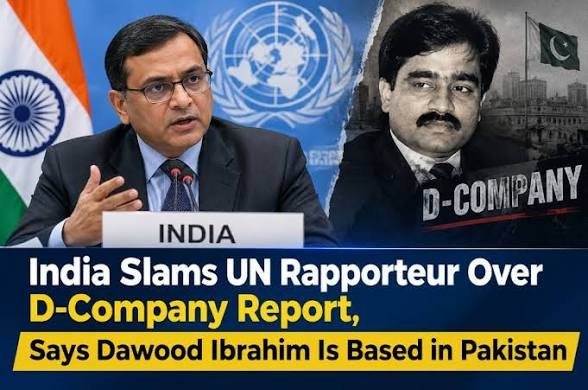
New Delhi: India objected to mistakes in a report written by Ben Saul, the United Nations Special Rapporteur who looks at rights and freedom while fighting terrorism. The report said that the wanted criminal Dawood Ibrahim lives in India. At a United Nations meeting an Indian diplomat said the claim is wrong. Warned that wrong facts in worldwide reports could damage the United Nations reputation.
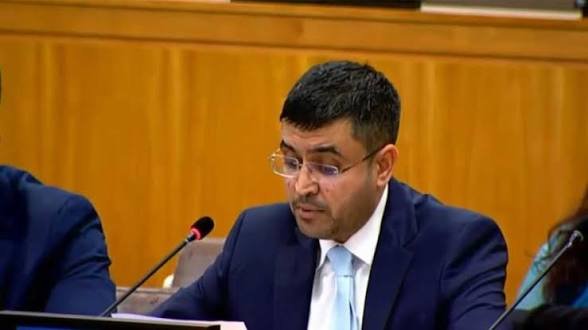
The objection was made by Raghoo Puri, First Secretary at India’s Permanent Mission to the United Nations. Referring to the July report Raghoo Puri said that the description of Dawood Ibrahim’s location does not match the information in the United Nations listing. India said that Dawood Ibrahim had left India before the 2003 United Nations Security Council listing.
During his speech Raghoo Puri tried to set the record. He said Dawood Ibrahim left India a time ago and that the listing links him to al‑Qaeda. His words pointed to Pakistan, where India has long claimed that the wanted man lives.
India points to the UNs own listing
Raghoo Puri said the report’s mention of Dawood Ibrahim’s location is very important because the United Nations listing itself shows the country where he is thought to live. He compared Dawood Ibrahim to Osama bin Laden, the al‑Qaeda leader who was killed by U.S. Forces in Abbottabad in 2011. Raghoo Puri said that Dawood Ibrahim is still wanted in India and that the United Nations list says he lives in the country where Osama bin Laden was found.
The comparison was meant to show India’s claim that Pakistan shelters people wanted for terrorism and other serious crimes.. The exact claim about Dawood Ibrahim’s current location is an allegation from Indian authorities and the United Nations listing, not a proven fact about where he is now.
Dawood Ibrahim is one of India’s wanted fugitives. Indian authorities say he is involved in organised crime and terrorism. His name is also tied to the 1993 Mumbai bomb blasts. India has asked for action times against him and other people accused of big attacks on Indian ground.
Pakistans record on terrorism raised again
The fight also gave focus to India’s claims that Pakistan lets wanted militants and criminals stay in its land for many years. Indian officials keep saying that people linked to attacks on India show that New Delhi thinks Pakistan does not act enough against cross‑border terrorism.
The 26/11 Mumbai attacks are still a point of conflict between India and Pakistan. The coordinated attacks in November 2008 killed over 160 people. Hit many places in Mumbai, such as hotels and a railway station. Indian investigators say the attacks came from the militant group Lashkar‑e‑Taiba. How the people responsible are dealt with is still a matter in the two nations’ relations.
India also says that pressure from the world has sometimes pushed Pakistan to act against groups and people accused of supporting terrorism. In its statement New Delhi criticised what it thinks are not measures against those wanted for attacks in India.
Pakistan has long denied Indian accusations that it supports terrorism. The big dispute shows the mistrust between the two neighbours, especially over security, militancy and holding people accused of planning attacks accountable.
Concerns over accuracy in UN reports
Beyond saying where Dawood Ibrahim is India’s objection was about the duty of United Nations experts to make sure reports have correct facts. Raghoo Puri pointed out what he said were serious mistakes about India and asked why the report had claims that according to New Delhi do not fit the records that exist.
The Indian diplomat mentioned the report’s talk about the 2003 United Nations Security Council listing of the leader of the group D‑Company and his link to al‑Qaeda. India said that the story should be fixed to match the facts and information, in the United Nations entry.
Special rapporteurs are experts chosen by the United Nations human rights system. They look at human rights problems or country situations do research and give reports in their own roles. They are not United Nations staff and must act on their own, not under governments.
Their reports can change how the world talks and how governments, scholars and people see rights and security matters. That is why facts must be correct when the reports name people, terrorist groups or talk about countries.
This makes accuracy important when documents refer to named individuals, terrorist organisations or allegations involving particular countries.
A wider debate over accountability
The episode shows the link between counter‑terrorism policy, human rights reporting and international accountability. Governments expect UN experts to look closely at security policies and human rights practices. Governments also expect reports to use information that can be verified and to separate facts that’re certain from claims that are disputed.
For India the mention of Dawood Ibrahim was especially worrying because he is a wanted fugitive for years and is said to be linked to serious crimes. New Delhi says that mistakes about people must not remain unchallenged especially when the information is in a report that belongs to the United Nations.
The next question is whether the disputed passage will be examined or fixed. Any change would depend on the UN reporting process that’s relevant and on the assessment of the information that the rapporteur has.
For now India’s objection has put the accuracy of the report under scrutiny. Has brought new attention to the long‑running dispute over fugitives, terrorism and Pakistan’s alleged role, in giving shelter to people that India wants arrested. The disagreement also shows how important it is to check records closely before calling sensitive security claims established fact.