
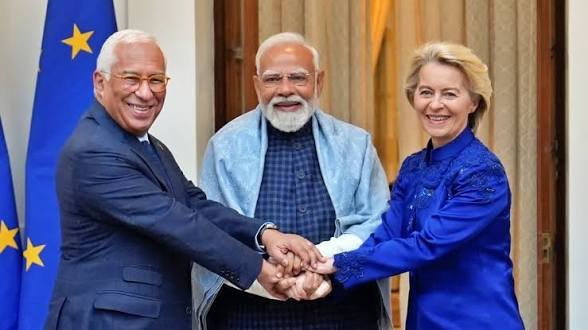
New Delhi, October 25, 2026: India and the European Union are speeding up efforts to complete the remaining formalities for their long-awaited free trade agreement (FTA), with both sides aiming to sign the deal in December. The proposed signing is expected to coincide with Prime Minister Narendra Modi’s planned visit to Brussels, although the dates have not yet been officially confirmed.
According to a report by Hindustan Times, officials are working towards December 17 or 18 for the signing ceremony. The proposed visit could take place as Modi returns from the G20 leaders’ meeting expected in Miami, United States. However, the schedule remains tentative and depends on the progress of the approval process.
The European Commission has asked the Council of the European Union to consider a fast-track procedure for approving the agreement. The move is intended to reduce delays and help both sides meet their target of signing the trade pact before the end of 2026.
EU Seeks Faster Approval Process
The European Commission has proposed completing the legal process using the original English version of the agreement instead of waiting for translations into all 24 official languages of the European Union. According to people familiar with the discussions, the translation process could otherwise delay progress by more than a year.
The proposal is aimed at speeding up the next stage of the agreement. However, the Council of the European Union must still approve the proposed step before the agreement can be signed.
India and the EU announced the conclusion of negotiations at the political level on January 27, 2026, during the India-EU summit in New Delhi. Since then, the two sides have been working on the legal details of the text and the procedures required before the agreement can take effect.
Even after signing, the trade pact will need to go through further approval and ratification steps. These include consent from the European Parliament and the required procedures on India’s side. Therefore, signing the agreement in December would not automatically mean that its trade provisions would begin immediately.
Indian Officials Continue Trade Discussions
India’s Commerce Secretary Rajesh Agrawal is expected to visit Brussels this week to discuss procedural issues related to the agreement, according to the Hindustan Times report.
His planned visit follows Commerce and Industry Minister Piyush Goyal’s recent trip to Germany and the Netherlands. During his European tour, which runs from October 22 to October 27, Goyal held discussions with officials on trade and economic cooperation.
In a social media post, the commerce minister highlighted the agreement’s potential to expand market access, strengthen supply chains and create fresh opportunities for trade and investment. His meetings in Germany included discussions with Federal Minister for Economic Affairs and Energy Katherina Reiche and economic and financial policy adviser Levin Holle.
A delegation from the European Parliament’s Committee on Foreign Affairs is also scheduled to visit New Delhi from October 26 to 28. The delegation is led by committee chair David McAllister. The visit is expected to provide another opportunity for engagement between Indian officials and European representatives.
What the Trade Agreement Could Mean
The India-EU agreement is expected to improve access to each other’s markets by reducing tariffs, simplifying trade procedures and providing clearer rules for businesses. It is also intended to make trade and investment more predictable for companies operating across the two economies.
India’s exports to European markets include textiles, chemicals, machinery, metals and petroleum products. European exports to India include machinery, transport equipment and chemicals. A reduction in trade barriers could create opportunities for businesses in these sectors, although the actual benefits will depend on the final terms and how companies use them.
According to figures cited in the Hindustan Times report, trade in goods between India and the EU reached approximately €118 billion in 2025. Trade in services amounted to around €67 billion during the same year.
The European Commission describes the agreement as the largest trade deal concluded by either side. Together, India and the EU represent around a quarter of the world’s population and roughly 25% of global gross domestic product.
Implementation Expected After Further Approvals
The agreement is expected to become operational in 2027 if the remaining procedures are completed on schedule. Goyal has said it could take effect within four to five months of signing, although the timeline will depend on the necessary approvals.
The negotiations themselves have a long history. Talks began in 2007 but were suspended in 2013 because of differences between the two sides. They resumed in 2022 following renewed political commitment to strengthen economic ties.
For India, the agreement could improve access to a major export market and support closer economic cooperation with European countries. For the EU, it offers an opportunity to expand commercial links with one of the world’s largest economies.
The immediate priority is to secure the necessary approvals and settle the remaining procedural questions. While December remains the target for signing the agreement, the final dates and implementation schedule have yet to be formally announced.