
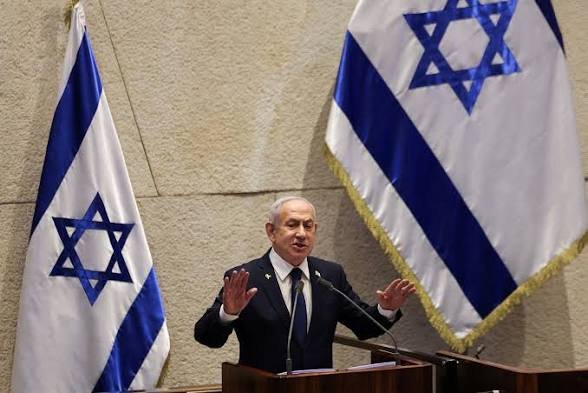
Jerusalem, October 27, 2026: Israel is voting in an election that could determine whether Prime Minister Benjamin Netanyahu remains in power after years of political controversy, security challenges and regional conflict. The vote comes nearly three years after the Hamas-led attack of October 7, 2023, which exposed major gaps in Israel’s security arrangements and triggered a devastating war in Gaza.
Netanyahu, Israel’s longest-serving prime minister, is facing questions about his government’s responsibility for the October 7 security failure, its handling of the war in Gaza and its wider approach towards Iran. While his supporters see him as an experienced leader capable of confronting threats to Israel, his critics argue that the country needs political change and greater accountability.
The election is not only a test of Netanyahu’s personal popularity. The composition of the next parliament and the ability of rival parties to form a governing coalition will also determine who leads the country. Even if one political camp performs strongly, negotiations between parties could prove decisive in deciding the next government.
October 7 Attack Remains a Major Election Issue
The Hamas-led attack on southern Israel on October 7, 2023, remains one of the most significant issues in the election campaign. Around 1,200 people were killed and 251 were taken hostage, according to figures reported following the attack.
The assault raised serious questions about Israel’s intelligence and security systems and how the attack was able to take place despite the country’s extensive defence infrastructure. Netanyahu’s opponents have argued that his government must answer for these failures and called for accountability over the events leading up to the attack.
The issue has continued to influence public debate, including questions about political responsibility and the need for an independent investigation into the security breakdown. For many critics, the election is an opportunity to express dissatisfaction with the government’s handling of the crisis.
Netanyahu has defended his government’s response, maintaining that Israel must take strong action against Hamas and other threats to prevent similar attacks in the future. However, the disagreement over responsibility for October 7 remains a central challenge for his political future.
Gaza War and Iran Conflict Shape Voters’ Concerns
The war in Gaza has further complicated Netanyahu’s position. Israeli military operations have caused widespread destruction across the Palestinian territory and a severe humanitarian crisis, with large numbers of Palestinians killed and many more displaced.
Netanyahu has maintained that the military campaign was necessary to weaken Hamas and protect Israeli citizens. His government has presented its security strategy as an effort to prevent future attacks and reduce threats from armed groups operating in the region.
At the same time, the war has drawn international criticism over its humanitarian consequences and the conduct of military operations. These concerns have added to the domestic debate over whether the government’s approach has achieved its stated objectives.
Iran has also remained a major part of Netanyahu’s security agenda. The Israeli prime minister has repeatedly described Iran’s nuclear programme and regional influence as serious threats. His supporters argue that a strong response is necessary to protect Israel, while critics question whether his policies have delivered lasting security or increased the risk of further regional confrontation.
The combined impact of the Gaza war and tensions with Iran means voters are assessing not only Netanyahu’s past decisions but also his ability to manage future security challenges.
Opposition Seeks to Challenge Netanyahu
Former military chief Gadi Eisenkot has emerged as one of the prominent figures challenging Netanyahu’s leadership. His background in the Israel Defense Forces gives him experience on security issues, a subject that is expected to remain central to voters’ decisions.
Eisenkot and other opposition figures have criticised Netanyahu’s handling of the October 7 attack and the wars that followed. They are seeking support from voters who want a different approach to national security, government accountability and Israel’s political direction.
However, the opposition faces its own challenge. The parties contesting the election do not necessarily share the same positions on every major issue. Their ability to work together after the results are announced will be crucial if they hope to replace Netanyahu’s government.
Netanyahu continues to have support among voters who favour his right-wing policies and believe his experience is important during a period of regional instability. His political future will therefore depend on both the electoral performance of his party and the willingness of other parties to support him.
Coalition Politics Could Decide the Outcome
Israel’s electoral system makes coalition-building an important part of government formation. The country’s 120-member Knesset is elected through proportional representation, meaning parties receive seats according to their share of the vote.
A government needs the support of at least 61 lawmakers to command a parliamentary majority. As a result, a party winning the largest number of seats does not automatically guarantee that its leader will become prime minister.
Netanyahu may need support from right-wing and religious parties to remain in office. Figures such as Itamar Ben-Gvir and Bezalel Smotrich have played important roles in the broader right-wing political camp, but coalition negotiations can involve disagreements over policy and government priorities.
The opposition, meanwhile, would need to assemble a sufficiently large and stable alliance. If neither side secures the support required to form a government, negotiations could become prolonged and leave Israel facing further political uncertainty.
Corruption Trial Adds to Political Pressure
Netanyahu’s ongoing corruption trial is another issue surrounding his leadership. He denies wrongdoing, but the proceedings have continued to feature in political debate and criticism of his government.
Opponents argue that the legal case raises questions about his suitability to remain prime minister. His supporters, however, continue to back him and reject attempts to make the proceedings the deciding factor in his political future.
The election will offer an important indication of how voters view Netanyahu after the October 7 attack, the wars in Gaza and the wider regional confrontation with Iran. However, the result alone may not immediately settle the question of who will govern Israel.
Netanyahu’s ability to secure parliamentary support will be as important as his party’s performance at the polls. For Israel, the election represents a critical moment in a period marked by security concerns, public divisions and uncertainty over the country’s future direction.